

Sustainable Living in Nepal: 9 Habits Shaping Our Future Tomorrow
Introduction: A Quiet Question Rising from Our Hills
Every morning in Nepal, we wake up to beautiful contradictions. Crystal rivers flowing beside plastic waste. Fertile land slowly losing its strength. Young minds full of dreams, yet unsure how to build a future that respects both nature and progress.
As I walk through villages, cities, farms, and tech spaces, one question keeps returning to me: how do we move forward without losing what makes us human and rooted?
This is where Sustainable Living in Nepal becomes not just an idea, but a necessity. It is about living wisely today so our children can live freely tomorrow. It is about balance—between nature and technology, tradition and innovation.
And the good news? Change does not start with policies alone. It starts with habits—simple, powerful habits we can adopt together.
Understanding Sustainable Living in Nepal
Sustainable Living in Nepal is more than just a lifestyle choice—it is a commitment to protecting our natural resources, nurturing our communities, and creating a future where generations can thrive without compromise. It is a way of life that recognizes the delicate balance between what we take from the Earth and what we give back. Every decision, from the food we eat to the energy we consume, has an impact. Sustainable living is about making those choices consciously, with awareness and care.
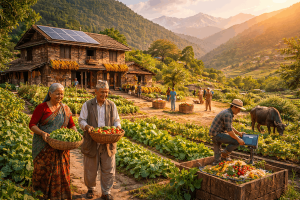
In Nepal, this is not entirely new. For centuries, our grandparents and ancestors lived in harmony with nature. They didn’t need the word “sustainability” to guide them—they practiced it instinctively:
-
Local food systems: They relied on locally grown grains, vegetables, and fruits, reducing the need for long-distance transportation and keeping economies local.
-
Seasonal eating: Every crop, fruit, and vegetable had its time. Eating with the seasons ensured both health and harmony with nature.
-
Respect for forests and water: Rivers were sacred, forests were protected, and natural cycles were honored. Water was never wasted, and forests were treated as community treasures.
-
Community-based living: Life revolved around neighbors, shared work, and collective responsibility. Everything from farming to festivals involved collaboration, trust, and care for one another.
Today, the landscape has shifted dramatically. Urbanization, climate change, unmanaged technology, and consumer culture are creating pressures our ancestors could hardly imagine. Rivers that were once crystal clear now carry plastic waste; fertile land is shrinking under concrete; youth are leaving villages in search of distant opportunities, disconnected from their roots. Our traditional wisdom, while still relevant, faces challenges in this modern, fast-paced world.
This is where Sustainable Living in Nepal takes on a new meaning. It is not about rejecting technology, progress, or urban life. Nor is it about turning back time and abandoning modern conveniences. Instead, it is about upgrading our ancestral wisdom with modern knowledge, responsible innovation, and mindful choices.
-
Using technology wisely—like AI and smart farming—to reduce waste, improve efficiency, and support local agriculture
-
Embracing urban gardening and rooftop farms to reconnect with nature in cities
-
Choosing renewable energy sources, water-saving solutions, and eco-conscious products
-
Building community networks that share knowledge, resources, and support sustainable lifestyles
Sustainable living today is not about going backward. It is about moving forward, mindfully and intentionally, blending the wisdom of our past with the possibilities of our future. It is a journey that honors the Earth, uplifts communities, and gives every Nepalese citizen—young and old—a chance to contribute to a resilient, thriving, and hopeful future.
Why Sustainable Living in Nepal Matters Today
Nepal stands at a critical crossroads.
Environmental Impact
- Melting हिमाल (Himalayas)
- Unpredictable monsoon patterns
- Soil degradation and water scarcity
Health & Lifestyle
- Rising lifestyle-related illnesses
- Chemical-heavy food systems
- Disconnection from nature
Economic & Social Impact
- Youth migration
- Dependency on imports
- Loss of local skills and livelihoods
By adopting Sustainable Living in Nepal, we:
- Reduce environmental damage
- Improve food and health security
- Create local jobs
- Strengthen national resilience
Sustainability is not a luxury.
It is a survival skill.
Role of Technology, AI & Innovation in Sustainability
Many believe sustainability means rejecting technology. I believe the opposite.
As someone with 8+ years in IT, computing, AI, and farm automation, I see technology as a powerful ally of nature—when used responsibly.
How Technology Supports Sustainable Living in Nepal
- AI-powered smart farming reduces water (Aquaponics), fertilizer, and energy waste
- IoT sensors monitor soil, climate, and crops in real time
- Automation & robotics reduce labor pressure while improving efficiency
- Data-driven decisions help farmers predict weather and demand
Technology should not replace farmers.
It should empower them.
Sustainable living is strongest when nature + technology + human wisdom work together.
Practical Ways to Apply Sustainable Living in Nepal
You don’t need to change your entire life overnight. Start with habits.
1. Eat Local, Seasonal, and Mindful
- Support local farmers
- Reduce food miles
- Choose seasonal produce
2. Grow Something—Even Small
- Balcony gardening
- Rooftop farming
- Herbs in reused containers
Food connection builds responsibility.
3. Reduce Waste at the Source
- Say no to single-use plastic
- Compost kitchen waste
- Repair before replacing
4. Save Energy Intentionally
- Use natural light
- Switch off unused devices
- Explore solar where possible
5. Choose Sustainable Transport
- Walk, cycle, or share rides
- Reduce fuel dependency
6. Respect Water as Sacred
- Fix leaks
- Harvest rainwater
- Use water consciously
7. Support Ethical Local Businesses
- Buy Nepali-made products
- Encourage fair trade and transparency
8. Learn & Share Knowledge
- Teach children sustainability values
- Share skills within community
9. Use Technology with Purpose
- Avoid digital overconsumption
- Use tech to solve real problems, not create new ones
These habits define Sustainable Living in Nepal at the personal level.
Challenges & Honest Limitations
Let’s be honest—sustainability is not easy.
Real Challenges
- Initial cost of sustainable tools
- Limited awareness in rural areas
- Policy gaps
- Resistance to change
- Short-term thinking
But challenges are not stop signs.
They are design problems waiting for solutions.
Transparency builds trust, and trust builds movements.
Future Scope & Opportunities in Nepal
Nepal has massive potential.
Youth & Innovation
- Green startups
- Agri-tech solutions
- AI-driven sustainability tools
Employment & Skills
- Renewable energy
- Eco-tourism
- Sustainable manufacturing
National Opportunity
Nepal can become a living laboratory of sustainable living, blending ancient wisdom with future technology.
The future of Sustainable Living in Nepal belongs to those who build—not complain.
Common Myths & Truths About Sustainable Living
Myth: Sustainable living is expensive
Truth: Wasteful living is expensive long-term
Myth: Only villages can be sustainable
Truth: Cities can lead with innovation
Myth: Technology destroys nature
Truth: Uncontrolled technology does
Myth: One person can’t make a difference
Truth: Every movement starts with one habit
Bhuone Perspective: Nature + Tech + Community
For me, sustainability is not a business model.
It is a responsibility.
I believe:
- Nature is our teacher
- Technology is our tool
- Community is our strength
I don’t aim to sell sustainability.
I aim to live it, learn it, and share it.
Sustainable Living in Nepal is a movement—built by farmers, coders, students, thinkers, and everyday people who care.
Conclusion: The Future Is a Daily Choice
Sustainability is not about perfection.
It is about conscious progress.
Every time you choose local food, save water, grow a plant, or use technology responsibly—you shape the future.
Let us reconnect with nature.
Let us innovate with humility.
Let us live—not just exist.
The future of Sustainable Living in Nepal begins today—with you.
External Resources Links You have to See
🌱 This is not just an article. It is an invitation—to live better, together.


Pingback: Food Security in Nepal: 7 Urgent Truths We Must Face Together - Bhuone
Pingback: Soil Health in Nepal: Healing Paths for Sustainable Future