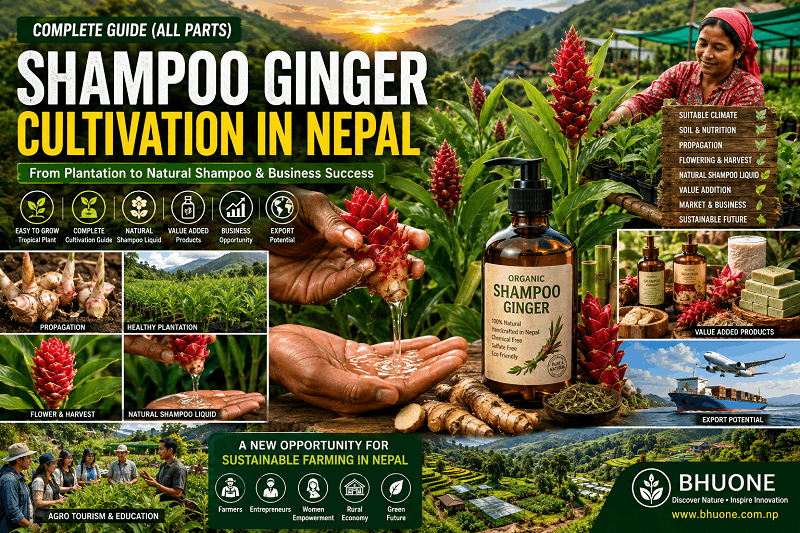
Shampoo Ginger Plant Guide 2026: Nepal’s Hidden Green Gold Waiting
to Bloom
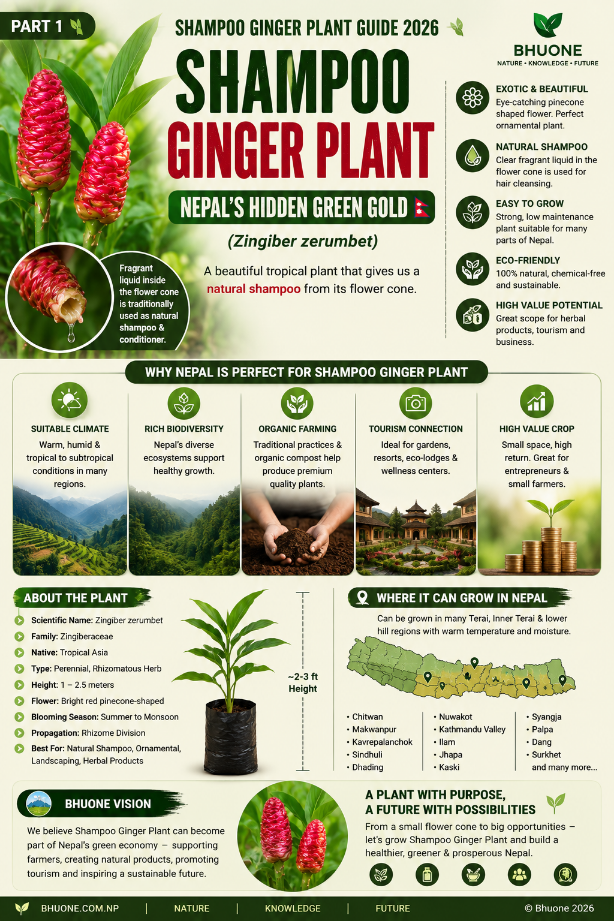
Imagine walking through a lush tropical garden where bright red pinecone-like flowers don’t just attract attention—they contain a naturally fragrant liquid that can clean and soften your hair.
This isn’t science fiction.
It is Shampoo Ginger Plant (Zingiber zerumbet), one of nature’s most fascinating gifts.
While millions of people spend money on chemical-based shampoos every year, this remarkable tropical plant quietly produces its own natural hair cleanser inside its flower cone. Surprisingly, very few people in Nepal know about it, and even fewer are cultivating it commercially.
At Bhuone, we believe Nepal has entered a new era of agriculture. Instead of competing only in traditional crops, our farmers and entrepreneurs can create value through unique medicinal, ornamental, and cosmetic plants that the global market increasingly demands.
Among those opportunities, Shampoo Ginger Plant stands out as one of the most promising.
What is Shampoo Ginger Plant?
Shampoo Ginger (Zingiber zerumbet) belongs to the ginger family (Zingiberaceae). Native to tropical Asia, it has spread across many warm regions of the world because of its ornamental beauty and unique cosmetic value.
Unlike common culinary ginger, this species is mainly appreciated for its striking red cone-shaped flower, which gradually fills with a clear, pleasantly scented liquid. Traditionally, people gently squeeze the mature flower cone and apply this liquid directly to their hair as a natural shampoo or conditioner.
Its broad green leaves, lush growth, and eye-catching flowers also make it an excellent ornamental plant for gardens, resorts, hotels, and eco-tourism destinations.
Why Bhuone Believes This Plant Matters
Agriculture is changing.
Consumers around the world are searching for:
Natural products
Organic ingredients
Plastic-free alternatives
Herbal cosmetics
Sustainable lifestyles
Eco-friendly brands
Instead of importing finished cosmetic products, Nepal has the potential to cultivate plants like Shampoo Ginger and transform them into high-value natural products.
This is where biodiversity meets entrepreneurship.
Can Shampoo Ginger Grow in Nepal?
The answer is yes—and the outlook is encouraging.
Nepal’s varied climate allows many tropical and subtropical plants to thrive in suitable regions. Shampoo Ginger prefers:
Warm temperatures
High humidity
Rich organic soil
Good drainage
Partial shade to filtered sunlight
Regular moisture
These conditions are naturally available in many parts of Nepal, especially in lower hills, valleys, and subtropical districts.
With proper winter protection in colder areas, the plant can also be successfully grown in home gardens, greenhouses, and protected nurseries.
Why Nepal Has Great Potential
Nepal offers several natural advantages for cultivating Shampoo Ginger:
1. Diverse Climate
From the Terai to mid-hill regions, Nepal provides suitable environments for tropical ornamentals.
2. Organic Farming Potential
Many farms already use compost and traditional practices, making it easier to produce premium-quality plants.
3. Growing Demand
Consumers increasingly prefer herbal, chemical-free personal care products.
4. Tourism Industry
Hotels, resorts, wellness retreats, and eco-lodges can showcase Shampoo Ginger as both an ornamental attraction and a natural wellness plant.
5. Small Land, High Value
Unlike many field crops, Shampoo Ginger offers opportunities to generate value from relatively small cultivation areas.
More Than Just a Beautiful Flower
Most people first notice the plant because of its vibrant cone-shaped flowers. However, its real value lies in the opportunities it creates.
It can become:
A nursery plant
A landscape feature
A wellness garden attraction
A source of natural cosmetic ingredients
An educational plant for schools and botanical gardens
A niche crop for herbal entrepreneurs
Rather than viewing it only as an ornamental species, it should be seen as part of Nepal’s growing green economy.
Bhuone Perspective: A Plant with a Purpose
At Bhuone, we don’t just see Shampoo Ginger as another exotic plant. We see it as an example of how Nepal can move toward value-added agriculture.
Imagine farmers cultivating not only vegetables but also medicinal and cosmetic plants. Imagine local entrepreneurs producing natural hair care products inspired by Himalayan biodiversity. Imagine eco-resorts introducing guests to gardens filled with functional plants that are both beautiful and useful.
This vision aligns with a future where agriculture, innovation, and sustainability work together.
Shampoo Ginger may not replace traditional crops, but it has the potential to become one of Nepal’s most exciting specialty plants.
Summary
In this first part, we explored:
What Shampoo Ginger Plant is
Why it is unique
Why Nepal is suitable for cultivation
The opportunities it offers
Bhuone’s vision for its future.
Shampoo Ginger Plant Guide 2026 (Part 2)
21 Amazing Uses of Shampoo Ginger Plant: From Natural Hair Care to Nepal’s Green Business Revolution
Introduction
Most people recognize the Shampoo Ginger Plant (Zingiber zerumbet) because of its beautiful red pinecone-shaped flower. However, its real value extends far beyond its ornamental beauty.
At Bhuone, we believe every remarkable plant should create value for farmers, entrepreneurs, consumers, and nature. Shampoo Ginger is one such plant. It has the potential to become a source of sustainable income, innovative herbal products, eco-tourism experiences, and environmentally friendly businesses in Nepal.
Instead of selling only live plants, Nepal can develop an entire value chain—from cultivation to premium natural cosmetic products.
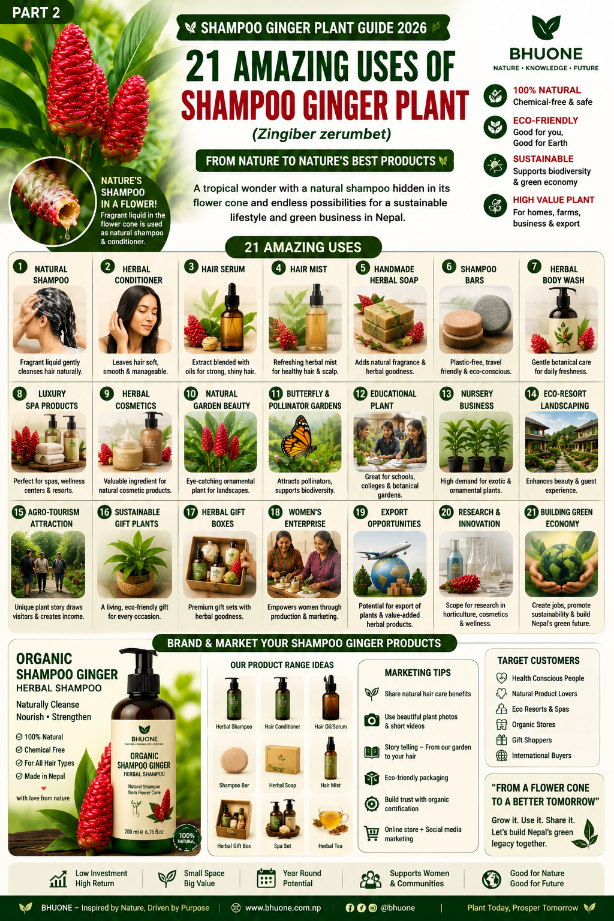
Here are 21 practical and innovative uses of Shampoo Ginger Plant.
1. Natural Herbal Shampoo
The mature flower cone contains a pleasantly scented liquid traditionally used as a natural shampoo. It gently cleanses the hair without relying on synthetic detergents.
2. Natural Hair Conditioner
The gel-like liquid helps soften hair and can be used as a simple botanical conditioner after washing.
3. Herbal Hair Serum
The extract may be blended with botanical oils to create premium herbal hair serum products.
4. Botanical Hair Mist
A refreshing plant-based hair mist could become a unique natural cosmetic made in Nepal.
5. Handmade Herbal Soap
Its fragrance and botanical appeal make it an attractive ingredient for handcrafted soaps.
6. Shampoo Bars
Plastic-free shampoo bars are becoming increasingly popular worldwide. Shampoo Ginger offers exciting possibilities for eco-friendly formulations.
7. Herbal Body Wash
The plant can inspire gentle botanical body cleansing products.
8. Luxury Spa Products
Wellness centers and luxury resorts can use Shampoo Ginger in natural spa experiences.
9. Herbal Cosmetic Ingredients
Cosmetic manufacturers continually seek new plant-based ingredients. Shampoo Ginger could become part of Nepal’s herbal cosmetic industry.
10. Natural Garden Beauty
Its striking flowers enhance gardens, parks, hotels, and landscape projects.
11. Butterfly & Pollinator Gardens
Its lush tropical appearance complements biodiversity-friendly landscapes.
12. Educational Botanical Gardens
Schools, universities, and botanical gardens can showcase Shampoo Ginger as an example of useful tropical biodiversity.
13. Nursery Business
Demand for rare ornamental plants continues to grow. Healthy nursery plants can become a profitable specialty product.
14. Eco-Resort Landscaping
Hotels and eco-resorts can create memorable landscapes featuring Shampoo Ginger.
15. Agro-Tourism Attraction
Visitors enjoy learning about unusual plants that naturally produce a fragrant hair-cleansing liquid.
16. Sustainable Gift Plants
A living Shampoo Ginger plant makes an eco-friendly gift for gardeners and nature lovers.
17. Herbal Product Gift Boxes
Imagine a premium gift box containing Shampoo Ginger-inspired shampoo, soap, hair oil, and herbal tea alongside educational information.
18. Women’s Community Enterprises
Women’s cooperatives can participate in nursery production, processing, packaging, and marketing of value-added products.
19. Export Opportunities
With quality production and compliance with international regulations, Nepal could explore export opportunities for plants and value-added herbal products.
20. Research & Innovation
Universities, researchers, and startups can explore new applications in horticulture, cosmetics, and sustainable agriculture.
21. Building Nepal’s Green Economy
Rather than exporting raw resources, Nepal can create jobs by producing finished herbal products that carry higher value in domestic and international markets.
Bhuone Perspective
At Bhuone, we don’t simply see Shampoo Ginger as an ornamental plant—we see it as a symbol of Nepal’s future.
A single plant can support:
Sustainable farming
Herbal entrepreneurship
Eco-tourism
Women’s enterprises
Nursery businesses
Biodiversity conservation
Value-added manufacturing
When innovation meets nature, even one tropical flower can inspire an entire green industry.
Part 2 Summary
The Shampoo Ginger Plant offers opportunities far beyond home gardening. From natural hair care to herbal cosmetics, eco-tourism, and sustainable business, it represents a promising specialty crop for Nepal.
Shampoo Ginger Plant Guide 2026 (Part 3)
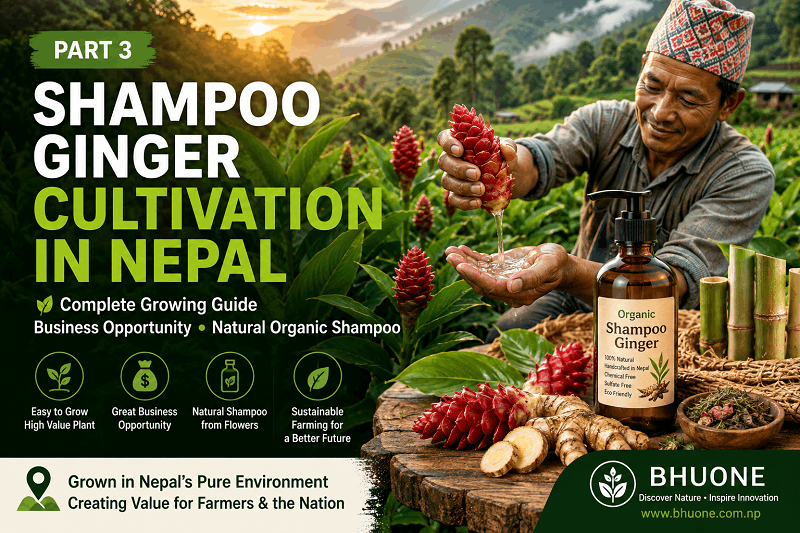
How to Grow Shampoo Ginger Plant in Nepal: Complete Cultivation Guide, Commercial Farming Report & PlantNepal.com Review
Introduction
Nepal is entering a new era of agriculture where high-value specialty crops are becoming more important than traditional farming alone. As global demand grows for natural, organic, and sustainable products, farmers and entrepreneurs have an opportunity to cultivate unique plants that offer both environmental and economic value.
One such remarkable species is the Shampoo Ginger Plant (Zingiber zerumbet).
Known for its striking red pinecone-like flower that produces a fragrant natural liquid traditionally used as a shampoo, this plant is far more than an ornamental curiosity. It represents a promising opportunity for Nepal’s nursery industry, herbal cosmetics, eco-tourism, and value-added agriculture.
At Bhuone, we believe Shampoo Ginger is one of the hidden botanical treasures that deserves greater attention from growers, researchers, and entrepreneurs across Nepal.
Why Shampoo Ginger Matters
Unlike common ginger, Shampoo Ginger is valued primarily for:
- Natural hair-cleansing liquid found inside mature flower cones
- Attractive ornamental appearance
- Potential use in herbal cosmetic products
- Eco-friendly and sustainable cultivation
- Nursery and landscaping value
- Agro-tourism opportunities
It is a plant that combines beauty, biodiversity, and business potential.
Can Shampoo Ginger Grow in Nepal?
The answer is Yes.
Nepal’s diverse geography provides many suitable environments for cultivating Shampoo Ginger, especially in tropical and subtropical regions.
Highly Suitable Areas
- Chitwan
- Jhapa
- Morang
- Sunsari
- Makwanpur
- Dang
- Kailali
- Kanchanpur
Suitable with Good Management
- Kathmandu Valley
- Kavrepalanchok
- Dhading
- Nuwakot
- Pokhara
- Palpa
- Syangja
In colder locations, greenhouse cultivation or container gardening helps protect plants from frost.
Ideal Growing Conditions
| Requirement | Recommendation |
|---|---|
| Temperature | 20–32°C |
| Sunlight | Partial shade |
| Soil | Rich organic loam |
| Drainage | Excellent |
| Humidity | Moderate to High |
| Water | Consistently moist but not waterlogged |
Best Soil Mix
Bhuone recommends the following growing medium:
- 40% fertile garden soil
- 30% organic compost
- 20% cocopeat
- 10% river sand
Ideal Soil pH: 6.0–7.0
This mixture provides excellent drainage while maintaining sufficient moisture for healthy rhizome development.
Propagation
The easiest and most reliable propagation method is rhizome division.
Steps
- Select healthy disease-free rhizomes.
- Cut sections containing 2–3 healthy buds.
- Allow cut surfaces to dry briefly before planting.
- Plant 5–8 cm deep.
- Water lightly after planting.
New shoots generally emerge within 2–4 weeks, depending on temperature.
Water Management
Shampoo Ginger prefers evenly moist soil.
Recommended Practice
- Water regularly during summer.
- Reduce watering during cooler months.
- Avoid standing water around rhizomes.
- Apply mulch to conserve soil moisture.
Organic Nutrition Program
Bhuone recommends focusing on organic inputs such as:
- Farmyard manure
- Vermicompost
- Neem cake
- Bone meal
- Compost tea
- Jeevamrit (where appropriate)
Healthy organic soil often produces stronger plants with better flowering performance.
Flowering and Harvest
Flowering generally begins 6–10 months after planting, depending on climate and growing conditions.
As flower cones mature, they gradually fill with a clear aromatic liquid traditionally used for natural hair care.
Harvest only mature flower cones without damaging the plant.
Value Addition Opportunities
Rather than selling only nursery plants, Nepal can develop higher-value products such as:
- Organic Shampoo
- Herbal Conditioner
- Hair Serum
- Shampoo Bars
- Handmade Herbal Soap
- Spa Products
- Resort Amenities
- Premium Gift Boxes
- Nursery Plants
Value-added products can generate greater income than selling raw planting material alone.
Nepal Agricultural Research Council (NARC)
Commercial Farming Potential
Shampoo Ginger is well suited for:
- Home gardens
- Commercial nurseries
- Organic farms
- Herbal cosmetic businesses
- Eco-resorts
- Agro-tourism projects
- Botanical gardens
Its ornamental beauty and cosmetic potential create multiple income streams from a single crop.
PlantNepal.com Review
From Bhuone’s editorial perspective, PlantNepal.com is one of Nepal’s recognized online nurseries for rare and specialty plants.
Positive observations include:
- Healthy nursery-grown plants
- Careful packaging for delivery
- Availability of uncommon ornamental and medicinal species
- Useful plant care information
- Nationwide delivery options
As with any online purchase, buyers should confirm current availability, pricing, and delivery terms before ordering.
Where to Buy Shampoo Ginger Plant in Nepal
If you are looking for healthy nursery-grown Shampoo Ginger Plants (Zingiber zerumbet), you can explore PlantNepal.com, one of Nepal’s online nurseries specializing in exotic, ornamental, and rare plants. Check the latest availability, plant size, and delivery options before ordering.
Link: Plant Nepal Nursery
Bhuone Expert Perspective
Nepal should not focus only on exporting raw agricultural products.
The future lies in creating premium Nepal-made herbal products that combine biodiversity, sustainability, and innovation.
Shampoo Ginger has the potential to support:
- Youth entrepreneurship
- Women-led enterprises
- Herbal cosmetic startups
- Eco-tourism
- Sustainable farming
- High-value nursery businesses
With proper branding and quality control, Nepal can transform unique plants into internationally recognized products.
Read more Bhuone Blogs
Further Reading
For readers who want to explore more about Zingiber zerumbet, the following organizations provide reliable botanical and horticultural information:
- Royal Botanic Gardens, Kew (Plants of the World Online)
- Missouri Botanical Garden
- CABI
- Food and Agriculture Organization (FAO)
- Nepal Agricultural Research Council (NARC), where relevant research is available
- Department of Agriculture, Nepal
Conclusion
The Shampoo Ginger Plant is more than an ornamental tropical species. It represents a unique opportunity for Nepal to diversify agriculture, encourage innovation, and build a sustainable green economy.
From natural hair care and herbal cosmetics to agro-tourism and specialty nurseries, this remarkable plant offers possibilities that extend well beyond traditional farming.
At Bhuone, we believe that by investing in knowledge, quality cultivation, and value-added products, Nepal can unlock the full potential of Shampoo Ginger and position itself as a producer of premium botanical products for both domestic and international markets.